

Do We Still Need Software Architects?
If AI can generate working software in minutes, why does software architecture still matter? As prototyping becomes cheap and iteration nearly instant, traditional upfront design starts to look increasingly obsolete. Yet this shift raises a critical tension: while speed and experimentation improve, we may be trading away long-term structure, maintainability, and scalability in the process.
Picks, Shovels, and Silicon: Who Wins the AI Gold Rush?
What happens when anyone can build software instantly? As AI drives marginal costs to near zero, the industry begins to resemble a gold rush—except the winners may not be the builders. Companies like OpenAI are selling the “picks and shovels,” capturing value while developers face intensifying competition and shrinking margins.
Why Taxing AI Misses the Point
An algorithm tax may seem like a natural response to the rise of AI, but it misunderstands how digital markets work. As software becomes abundant and cheap to produce, competition drives prices and profits toward zero. Instead of generating broad taxable value, AI concentrates economic gains in a few dominant platforms, making taxation far more complex than it appears.
The Future of AI: An Exciting Journey to a Dystopian Reality
Welcome to the world of AI, where robots are smarter than humans, and humans are just a bunch of useless bags of flesh who are completely dependent on them. Yup, you heard it right, the future of AI is here, and this is the world where robots will take over all the jobs, leaving us with nothing but leisure time to play video games, watch TV, and scroll through our Facebook feeds.
![a portrait of intergalactic [name], symmetric, grim - lighting, high - contrast, intricate, elegant, highly detailed, centered, digital painting, artstation, concept art, smooth, sharp focus, illustration, artgerm, tomasz alen kopera, peter mohrbacher, donato giancola, joseph christian leyendecker, wlop, boris vallejo](https://d3v.one/wp-content/uploads/stable_diffusion-300x200.jpg)
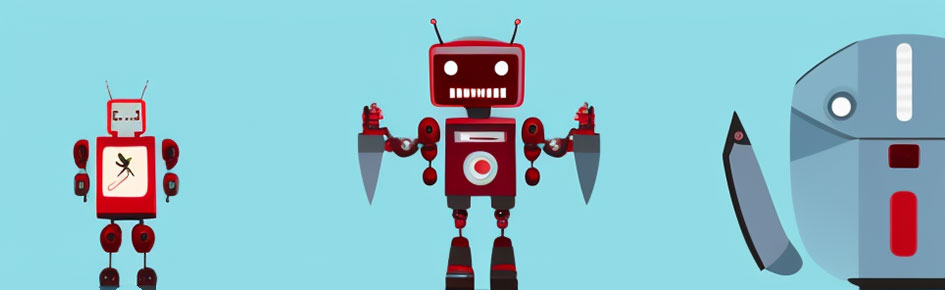
Create Images from Text with AI and Python
It all began with DALL-E, a machine learning model developed by OpenAI to generate digital images from natural language descriptions. But it is closed source and not open to the public. Yet on August 22, 2022, the AI art community was shaken by the release of an open-source alternative, Stable Diffusion, which you can install and run locally using modest hardware. Within days, PCWorld described it as the new killer app. And it surely is.

Google shuts down voice dialogs
As of June 13, 2023, Google will shut down all so-called "conversational actions" for their Google Assistant. Every action that involves a speech dialog, like food ordering, games, educational apps, story telling, every application that requires questions and answers, will be canceled. Effectively, the Google Assistant is crippled down to a simple command-and-control interface.

Wie man Zwei-Faktor-Authentifizierung implementiert
Zwei-Faktor-Authentifizierung kann auf einfache Weise mit dem zeitbasierten Einmalpasswort-Algorithmus auf jedem Webserver implementiert werden. Diese standardisierte Methode ist als zusätzliche Sicherheitsmaßnahme für Logins weit verbreitet und benutzt Smartphone-Apps wie den Google oder Microsoft Authenticator als zweiten Faktor.
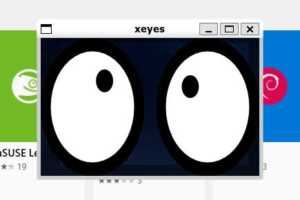
How to run Linux GUI applications on Windows 11
It's been a while since my last post about running Linux GUI applications on Windows 10. Meanwhile, Microsoft proposed its roadmap to bring GUI applications to the Windows Subsystem for Linux and now a preview is available. This project aims to enable support for running Linux GUI applications on Windows in a fully integrated desktop experience.
![a portrait of intergalactic [name], symmetric, grim - lighting, high - contrast, intricate, elegant, highly detailed, centered, digital painting, artstation, concept art, smooth, sharp focus, illustration, artgerm, tomasz alen kopera, peter mohrbacher, donato giancola, joseph christian leyendecker, wlop, boris vallejo](https://d3v.one/wp-content/uploads/stable_diffusion.jpg)