



Generation Laid Off: AI’s First Casualties in the Job Market
AI isn’t just changing the workplace—it’s reshaping who even gets to enter it. A groundbreaking Stanford study reveals that the very workers once seen as the future—22 to 25-year-olds in tech and customer service—are now its first casualties. Entry-level jobs in AI-exposed roles have plunged by double digits since late 2022, while older workers hold steady.

What you can ask from ChatGPT: A Cheat Sheet
This blog post presents a cheat sheet for working with ChatGPT, a large language model developed by OpenAI. The cheat sheet includes a range of useful commands and tips for fine-tuning the model, generating text and controlling the level of context and specificity in the model's responses. At least ChatGPT thinks so.

The Future of AI: An Exciting Journey to a Dystopian Reality
Welcome to the world of AI, where robots are smarter than humans, and humans are just a bunch of useless bags of flesh who are completely dependent on them. Yup, you heard it right, the future of AI is here, and this is the world where robots will take over all the jobs, leaving us with nothing but leisure time to play video games, watch TV, and scroll through our Facebook feeds.
![a portrait of intergalactic [name], symmetric, grim - lighting, high - contrast, intricate, elegant, highly detailed, centered, digital painting, artstation, concept art, smooth, sharp focus, illustration, artgerm, tomasz alen kopera, peter mohrbacher, donato giancola, joseph christian leyendecker, wlop, boris vallejo](https://d3v.one/wp-content/uploads/stable_diffusion-300x200.jpg)
Create Images from Text with AI and Python
It all began with DALL-E, a machine learning model developed by OpenAI to generate digital images from natural language descriptions. But it is closed source and not open to the public. Yet on August 22, 2022, the AI art community was shaken by the release of an open-source alternative, Stable Diffusion, which you can install and run locally using modest hardware. Within days, PCWorld described it as the new killer app. And it surely is.
Google shuts down voice dialogs
As of June 13, 2023, Google will shut down all so-called "conversational actions" for their Google Assistant. Every action that involves a speech dialog, like food ordering, games, educational apps, story telling, every application that requires questions and answers, will be canceled. Effectively, the Google Assistant is crippled down to a simple command-and-control interface.
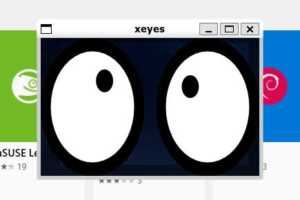
How to run Linux GUI applications on Windows 11
It's been a while since my last post about running Linux GUI applications on Windows 10. Meanwhile, Microsoft proposed its roadmap to bring GUI applications to the Windows Subsystem for Linux and now a preview is available. This project aims to enable support for running Linux GUI applications on Windows in a fully integrated desktop experience.

Implementing Two-Factor Authentication
Two-factor authentication using the time-based one-time password algorithm can be easily implemented with PHP on any web server. This standardized method is widely used as an additional security measure for logins and uses smartphone apps, e.g. the Google or Microsoft Authenticator, as a second factor.

Augmented Reality with Chrome: Let Flowers Grow!
With Chrome 81 Beta for Android, it’s now possible to use immersive Augmented Reality in the browser. I have again created two variations of the original demo source code to show what is easily possible. You can now walk around the earth, having a closer look, and (hopefully) spread joy by placing flowers wherever you like.

A minimal Web Push example
Web push notifications allow users to opt-in to asynchronous messages from a server to a web application. The message can be sent at any time, even when the web application or the web browser is inactive. This W3C standard, based on the HTTP/2 protocol, is now supported by Chrome, Firefox, Edge, Opera, and Safari – but not by iOS.

An Alexa skill for New York City transport service changes
Playing around with the idea of Alexa Skills based on live data feeds, I created an Alexa Skill which announces unplanned service changes of the New York City subway and bus lines, based on information provided by the Metropolitan Transportation Authority (MTA). This skill, available in English and German, was now certified and has gone live.

- Disgraced eMudhra drops out of TLS business after using cert private key of 4
- 333 Tor exit nodes hijacked to intercept SSH traffic and retrieve plaintext email
- Enterprises keep buying software upgrades that IT thinks will make things worse
- PHP warns it plans to release 2 emergency patches imminently
- The Internet goes on high alert after discovery of 8 compromised TLS certs